

Content keeps piling up. Studies, reports, whitepapers. There’s always something new to read and never enough hours to read it. The Hispanic Sentiment Study by We Are All Human is one I always make time for, but this year’s Latina Edition had been sitting in my downloads for weeks before I finally opened it.
When I did, I went through it the way I go through most research: quickly at first, slowing down when something catches my eye. I made it to page 9 before I stopped completely.
Section 4. The Consumer Power Play.
It’s not that the data surprised me. It’s that it said, with numbers, exactly what I’ve been saying out loud for years on LinkedIn and what we work on every day at Yucalab: that connecting with the Hispanic market isn’t just about showing up. It’s about how you show up. And for Latinas specifically, language isn’t a creative choice. It’s a trust signal.
That’s where this article starts.
There’s a number that should make every brand manager uncomfortable: 18%.
That’s the share of Latinas who feel their values are reflected by mainstream brands. Not 40%. Not even 30%. Eighteen percent.
You’re talking about one of the most economically powerful consumer segments in the country, a group that controls massive household purchasing decisions, that built their own parallel economy when corporations failed them, that is growing faster than almost every other demographic. And only 1 in 5 of them feel seen by the brands competing for their wallets.
That’s not a niche problem. That’s a systemic failure of strategy.
The Language Question Is Really a Trust Question
Here’s where it gets interesting, and where most brands get it completely wrong.
The instinct, when a company decides to “do Hispanic marketing,” usually falls into one of three traps.
The first: running the English campaign through Google Translate or a quick AI prompt, with no one who actually speaks the language checking what comes out.
The second: a proper localization process that gets the words right but misses the culture entirely.
And the third, maybe the most common, is what the Hispanic Marketing Council calls Latino coating: adding superficial Latino elements to existing content, a Spanish phrase here, a mariachi there, a flag emoji, a Heritage Month post, without any real understanding of the culture behind them.
These brands aren’t connecting with this market. They’re just checking a box. And there’s a big difference between cumpliendo (minimum effort) and connecting.
But the data tells a very different story.
According to the same study, 43% of Latinas prefer brands that advertise in Spanish, compared to only 23% of Hispanic men. That’s a 20-point gap. And when it comes to news media, Latinas trust Spanish-language sources at a rate of 30% versus just 8% for their male counterparts.
Think about what that actually means. For Latinas, Spanish is not a linguistic preference. It’s a filter. A signal. A way of asking: ¿Este brand me ve, o solo quiere mi dinero?
When a brand shows up in Spanish, authentically and not transactionally, it’s communicating something much deeper than language. It’s communicating safety. Respect. The willingness to meet someone where they are, on their terms, in their world.
When a brand shows up in Spanish, authentically and not transactionally, it’s communicating something much deeper than language. It’s communicating safety. Respect.
When it doesn’t? It’s failing a trust test that this audience takes very seriously.
The Loyalty Numbers Back It Up
This isn’t about feeling good. It’s about business outcomes.
The study also found that 55% of Latinas are more likely to become customers of a brand that plays a positive role in their family or community, a 25% increase since 2023. That number has been climbing year over year, which means the stakes are going up, not down.
This is what we call the loyalty premium. Latinas aren’t just transactional consumers. They are, as the study puts it, “community investors.” They direct their economic power toward brands that demonstrate cultural proximity and earn trust. And when they find one, they stay.
The flip side is equally powerful: brands that skip this signal don’t just miss an opportunity. They actively fail an evaluation that this consumer runs every single time she encounters a new brand.
But There’s a Collapse Happening in the Background
Here’s the context that makes this even more urgent.
Trust in English-language media among Hispanic audiences has been in freefall. According to the 2025 study, alignment with English-language news media dropped from 54.1% in 2018 to just 30.7% in 2025. That’s a collapse of institutional trust happening in real time.
What fills that vacuum? Spanish-language media, from legacy TV networks to digital outlets and community-driven platforms. Brands that actually show up in the spaces where this audience already lives and already feels at home.
If you’re a brand still betting entirely on English-language channels to reach Hispanic consumers, you’re not just leaving money on the table. You’re also swimming upstream against a trust deficit you didn’t create but absolutely have to account for.
And it’s not just traditional media. According to Nielsen, YouTube reaches 15.1% of Spanish-language dominant Hispanic viewers, making it the top streaming platform for this audience. Brands that are doing Hispanic marketing right have already figured this out: Spanish-language content on YouTube, targeted ads in Spanish, creators who speak directly to their community. The channel is there. The audience is there. The only thing missing, for too many brands, is the intentionality.
Beyond the Latino Coating
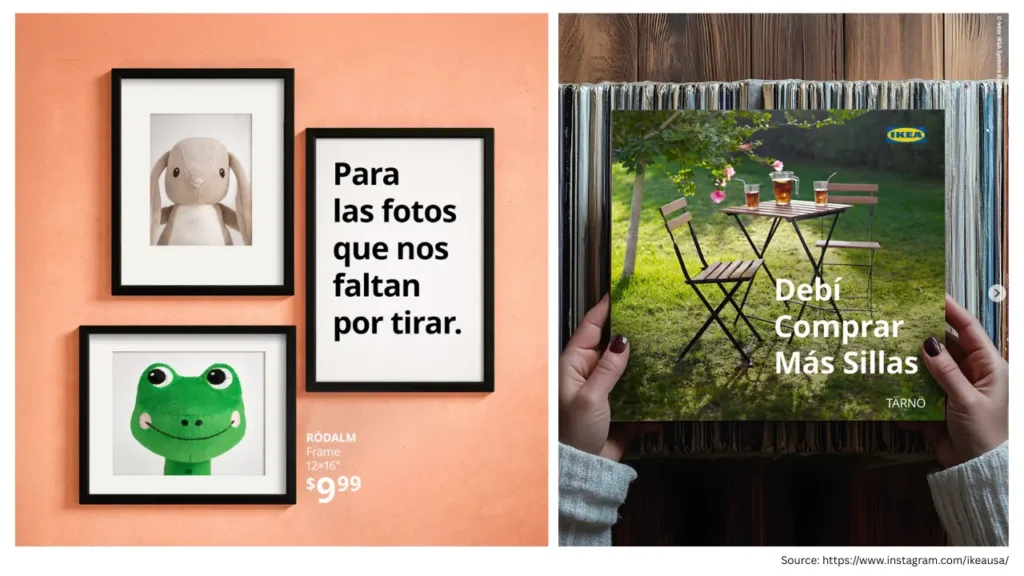
Some brands already understand this. IKEA USA has been posting content on Instagram that doesn’t just use Spanish — it thinks in Spanish. “Para las fotos que nos faltan por tirar.” “Debí Comprar Más Sillas.” Copy that wasn’t translated from anything, because it was never written in English first. The comments on their Instagram posts speak for themselves. One user wrote: “Seeing brands post in Spanish is making me emotional.” That’s not a customer reacting to a language choice. That’s someone feeling seen.
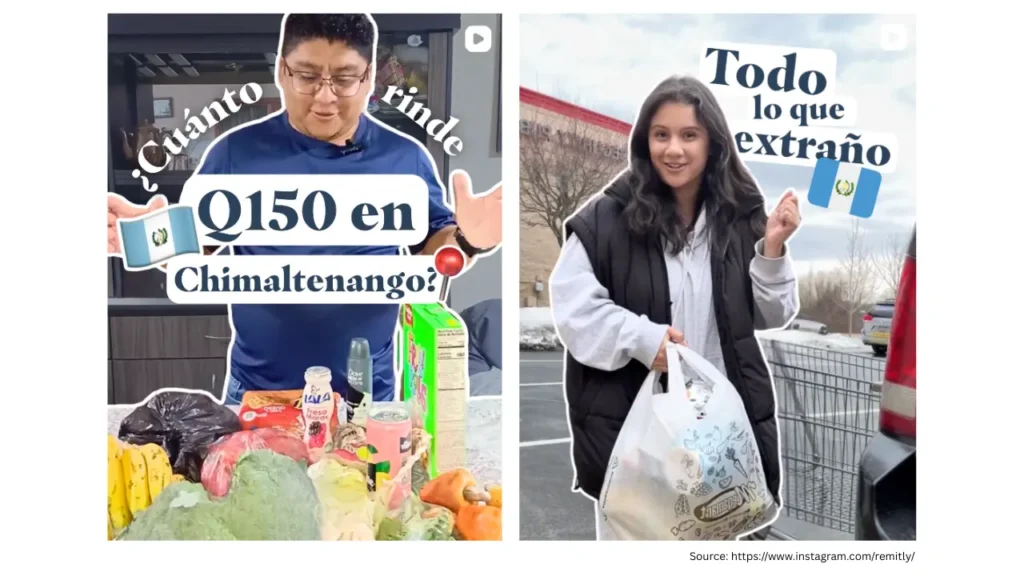
Remitly does something equally smart, but in a different direction. Their influencer content doesn’t speak to a generic “Hispanic audience.” It speaks to Guatemalans in their own slang, to Hondurans with their own cultural references, to each community on its own terms. Because they know that the person sending money to Chimaltenango and the person sending money to Medellín are not the same person, and shouldn’t be treated like they are.
But language is still just the entry point, not the destination. Latinas in particular rate justice (92.5%), learning (86.1%), and growth (84.3%) as their core North Star values. A brand that shows up in Spanish but fails to reflect those values isn’t going to earn loyalty. It’s just going to earn eye rolls.
The language is the handshake. The values are the relationship.
So, Is Your Brand Listening?
The 18% number isn’t just a statistic. It’s an open door.
It means 82% of Latinas are out there, buying, deciding, recommending, and directing trillions in spending, feeling like most brands don’t really see them. That’s not a saturation problem. That’s a market waiting for someone to do it right.
82% of Latinas are out there, buying, deciding, recommending, and directing trillions in spending, feeling like most brands don’t really see them.
Spanish is not optional for this market. It never was. But more importantly, it’s not just about language. It’s about what language signals: that you did the work, that you understand who you’re talking to, and that you’re here to build a real relationship, not just close a transaction.
And I’ll say this as a Latina myself, someone who grew up speaking Spanish and still does most of the time: I feel this data personally. Every time a brand shows up in my language, not because they had to, but because they chose to, I notice. It doesn’t go unnoticed. And when they do it well, when they celebrate us, include us, and give us a real place in their strategy and not just a Heritage Month afterthought, that’s when loyalty is earned. Not just mine. All of ours.