
The “SEO is dead” narrative has become one of the most profitable conversations in digital marketing. Every few months, a new acronym, AEO, GEO, AI-SEO, gets packaged as a replacement for Search Engine Optimization, usually by those looking to sell the “next big thing.”
The reality is simpler: SEO isn’t dying. It’s finally becoming what it was always meant to be.
The confusion is understandable. With the rise of AI Overviews, the shift toward conversational search, and platforms like TikTok and ChatGPT becoming discovery engines, the landscape looks unrecognizable compared to five years ago. But many brands are confusing evolution with replacement.
A relevant example is Google’s latest direction as of May 2026. In its recent update on AI-powered search features and the evolution of the Chrome ecosystem, Google reinforced that the goal is to make information more accessible and helpful, not to move away from the web. That aligns with what we believe at Yucalab: quality, relevance, and user intent are more critical now than ever.
The ecosystem around search changed. The core objective behind it didn’t. SEO has always been about helping the right people find the right information at the right moment. The signals and formats evolve, but the principles of trust, authority, and usefulness remain non-negotiable.
The problem is that many companies are being sold a “new” discipline every season, leading to unrealistic expectations and a focus on fleeting tactics rather than building genuine authority.
This article isn’t about rejecting AI search or dismissing terms like AEO or GEO. Some of these shifts are real and important. It’s about cutting through the hype to understand what actually changed, what stayed the same, and where your brand should invest its energy to remain visible in the modern era of search.
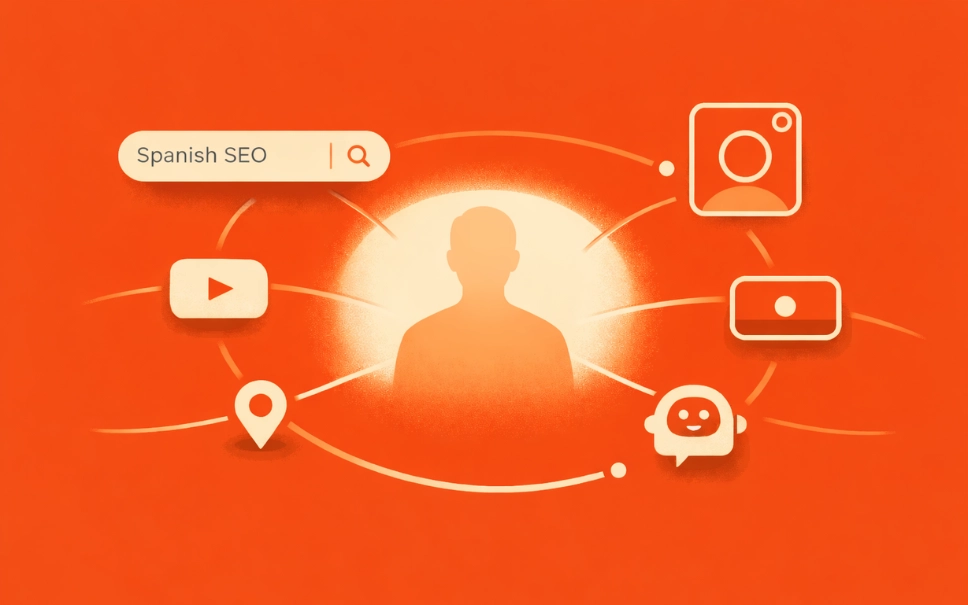
SEO still matters. What expanded is the discovery ecosystem around it. Today, visibility extends beyond traditional Google rankings into AI search, conversational interfaces, social discovery, and multimodal content experiences. The core objective remains the same: helping the right audience find, understand, and trust your content through useful, relevant, and authoritative experiences.
“SEO isn’t dying. It’s finally becoming what it was always meant to be.”
Key Takeaways
- SEO hasn’t died. The search ecosystem evolved around it.
- AEO, GEO, and AI SEO are extensions of discoverability strategy. They complement SEO, they don’t replace it.
- Authority, relevance, trust, and user experience still matter most.
- AI search increases the importance of original insights and real expertise.
- Search behavior is now more conversational and multi-platform.
- Brands targeting the U.S. Hispanic market need culturally adapted SEO strategies built around real audience behavior, not direct translations.
- The companies winning today are building trust and discoverability. Chasing every new acronym is the distraction.
Why People Keep Saying SEO Is Dead
The idea that SEO is “dying” isn’t new. People said SEO was dead when:
- Google launched major algorithm updates like Panda and Penguin.
- Mobile-first indexing changed how websites were evaluated.
- Voice search became popular.
- Featured snippets started reducing clicks.
- TikTok became a search engine for younger audiences.
- AI Overviews began answering informational queries directly inside Google.
And yet, SEO kept evolving.
Why? Because SEO has always adapted to changes in how people search and consume information.
The mistake is assuming that because the interface changes, the discipline disappears.
Search behavior has become more complex than it was a decade ago. The user journey has fragmented. People ask questions in AI tools, validate information on Reddit, watch YouTube videos for trust signals, compare opinions on social media, and only then visit a website or make a purchase decision.
That evolution is real and significant. What it doesn’t mean is that SEO stopped mattering. It means brands now need a deeper understanding of discoverability, search intent, and trust than ever before.
The Real Problem With SEO Buzzwords
One of the biggest problems in modern marketing is the tendency to rename natural evolutions of existing processes as completely new disciplines.
Terms like AEO (Answer Engine Optimization), GEO (Generative Engine Optimization), AI SEO, and LLM Optimization are everywhere. Some describe legitimate shifts in how content is surfaced and consumed. AI-generated answers, conversational search, and retrieval systems are genuinely changing the visibility landscape.
But many brands are being convinced they need to abandon SEO entirely and start over with something fundamentally different. That’s where confusion begins.
Without a solid foundation of authoritative content, clear site structure, topical expertise, technical accessibility, and audience understanding, no AI system will consistently recommend your brand. The terminology changed faster than the fundamentals did.
In many cases, what’s being sold as a revolutionary new process is simply SEO adapting to new discovery environments.
The real danger isn’t the existence of new concepts. It’s when companies become so focused on trendy terminology that they forget the actual purpose behind optimization: helping users find meaningful, trustworthy, useful answers.
What Actually Changed About SEO
The search ecosystem has changed dramatically over the last few years, but not always in the way many brands think.
The biggest shift isn’t that AI entered search. It’s that user behavior became far more fragmented, conversational, and validation-driven.
A decade ago, the journey was relatively simple:
Search → Click → Website
Today, users:
- ask questions to AI systems
- compare opinions on Reddit
- validate credibility through YouTube
- discover products on TikTok
- and often interact with multiple touchpoints before ever visiting a website
Search has evolved from a single destination into an ecosystem of discovery.
At the same time, Google itself evolved from indexing pages to increasingly understanding intent, context, and relationships between information. AI Overviews, semantic search, conversational interfaces, and LLM-powered systems are all part of that evolution. Google’s goal has shifted from ranking links to surfacing the most useful answer in the most contextual way possible.
That shift changes how visibility works. Today, discoverability may happen through:
- AI-generated citations
- featured snippets
- YouTube recommendations
- Reddit discussions
- podcast mentions
- or conversational search experiences
In many cases, users are making decisions before they ever click a traditional organic result.
But this is exactly why SEO still matters. Behind every AI-generated answer, recommendation engine, or conversational interface, there still needs to be:
- authoritative information
- trusted sources
- clear structure
- contextual relevance
- and content designed around real human intent
The platforms, mechanisms, and user journey all evolved. But the core challenge remains remarkably similar: helping search systems understand why your brand deserves to be discovered and trusted.
What Hasn’t Changed (And Still Matters Most)
Despite all the changes, the core principles behind successful SEO remain remarkably stable, especially for brands trying to reach and convert the U.S. Hispanic market through search.
Relevance Still Matters
If your content doesn’t answer the user’s actual question, no technical trick will save it. Search systems continue prioritizing relevance because their entire business model depends on delivering useful results.
Authority Still Matters
Google continues emphasizing expertise, experience, authoritativeness, and trustworthiness. In fact, AI-driven search likely amplifies the importance of authority rather than diminishing it.
Why? Because AI systems still need reliable sources to generate answers. Brands with strong topical authority, original insights, expert authorship, and trusted reputations are more likely to become cited sources in AI-generated responses.
User Experience Still Matters
SEO can bring someone to your website, but user experience determines whether they stay, trust you, and eventually convert. A slow, confusing, poorly structured website breaks trust immediately.
User experience is the goal. Rankings are just the means to get there.
Helpful Content Still Matters
Google has repeatedly emphasized the importance of people-first content. The companies consistently growing today are the ones becoming trusted entities within their niche, not the ones producing the highest volume of content.
They publish content that demonstrates:
- expertise
- clarity
- originality
- and audience understanding
That’s much harder for AI-generated mass content to replicate.
SEO Is No Longer Just About Google Rankings
One of the biggest shifts brands need to understand is that visibility no longer lives inside a single platform.
Today, discoverability happens across Google, YouTube, Reddit, TikTok, AI systems, podcasts, newsletters, and social platforms. That’s why many brands are now adopting a Search Everywhere Optimization approach, not because SEO disappeared, but because search behavior expanded beyond traditional search engines.
Traditional SEO focused heavily on:
- rankings
- keywords
- and organic traffic
Modern discoverability also involves:
- brand mentions
- topical authority
- author credibility
- multimedia visibility
- and cross-platform trust signals
SEO helps users find you when they search directly. Discoverability is when the broader digital ecosystem proactively surfaces you without a direct query. Both matter, and in AI-driven search environments, the line between them is getting thinner.
Why Human Experience Still Wins in the Age of AI
AI can accelerate workflows. It can help structure ideas, summarize information, and speed up production.
But it still struggles to replicate something that matters deeply to audiences: genuine human trust.
We experienced this directly at Yucalab with a client who decided to replace their personal presence on YouTube and social content with an AI-generated avatar version of themselves.
From an efficiency standpoint, the idea made sense:
- faster production
- lower operational costs
- scalable content creation
But the audience reacted differently. Engagement dropped significantly. Trust signals weakened. The connection with the community changed because the audience no longer perceived the same authenticity or credibility.
Eventually, after nearly a year of declining performance indicators, the client returned to a more human-centered strategy.
We rebuilt the content around:
- their real expertise
- actual audience pain points
- highly specific search intent
- and authentic communication
The channel began recovering. The algorithm hadn’t changed. What changed was audience behavior. Better engagement created stronger platform signals, which positively impacted visibility again.
That experience reinforced something important: technology can support discoverability, but trust still drives long-term performance.
“Technology can support discoverability, but trust still drives long-term performance.”
Why This Matters Even More for the U.S. Hispanic Market
This evolution in search becomes even more complex when brands target multilingual and multicultural audiences. The U.S. Hispanic market goes well beyond “Spanish-speaking.” It’s culturally hybrid, and that distinction changes everything about how search strategy should be built.
A strategy that works in Spain or Latin America won’t automatically resonate with Hispanic audiences in Miami, Houston, Chicago, Los Angeles, or New York. Search behavior itself changes depending on community, generation, and cultural context.
Many users:
- search in English
- consume content in Spanish
- compare information bilingually
- or switch languages depending on context and purchase intent
This creates entirely different discoverability patterns. Directly translating keywords is often one of the biggest SEO mistakes brands make, especially without proper multilingual keyword research and cultural context.
Search intent, emotional triggers, trust signals, and even terminology vary significantly across Hispanic communities. Modern SEO for the U.S. Hispanic market requires cultural adaptation, audience understanding, multilingual search behavior analysis, and localized content ecosystems.
In this environment, relevance is cultural as much as it is linguistic. And that difference often determines whether a brand becomes trusted or ignored.
What Brands Should Focus on Instead of Chasing Every New SEO Trend
The brands winning today are the ones consistently building authority, trust, useful content, strong user experiences, and recognizable expertise. Obsessing over every new acronym is the distraction.
Instead of chasing short-term hacks, brands should prioritize:
- Building Topical Authority: Become the reference point for a specific problem or audience.
- Understanding Real User Intent: Traffic without relevance rarely creates business growth.
- Creating Original Insights: AI can summarize existing information, but it struggles to replicate earned experience and unique perspective.
- Improving Discoverability Across Platforms: Visibility now extends beyond traditional search results.
- Strengthening Trust Signals: Expertise, author credibility, brand reputation, and audience connection matter more than ever.
- Staying Consistent: Long-term visibility is built through sustained authority. Trend chasing is what disrupts it.
SEO today is about becoming the best possible answer for your audience, wherever they search. That’s a harder goal than gaming an algorithm. It’s also a more durable one.
“SEO today is about becoming the best possible answer for your audience, wherever they search. That’s a harder goal than gaming an algorithm. It’s also a more durable one.”
Frequently Asked Questions About SEO in the AI Era
Does SEO still work with AI search?
Yes. AI search systems still rely on authoritative, relevant, and well-structured content sources to generate responses and recommendations.
Can AI replace SEO?
No. AI changes the interface, not the infrastructure behind it. Large Language Models rely on external, authoritative, and up-to-date sources to generate accurate responses. If a brand stops doing SEO, it stops being a credible source for AI to cite. In the modern ecosystem, SEO provides the high-quality data that feeds AI. Without that foundation, neither delivers real value.
Is SEO dead because of AI Overviews?
No. AI Overviews change how information is surfaced inside Google, but they don’t eliminate the need for authoritative content and discoverability strategies.
What is the difference between SEO and AEO?
SEO focuses broadly on improving visibility in search environments. AEO specifically emphasizes optimizing content for answer-based systems like AI Overviews and conversational search experiences.
What is GEO in SEO?
GEO refers to Generative Engine Optimization, which focuses on increasing visibility inside AI-generated search experiences and LLM-based systems.
Does SEO still matter for multilingual brands?
Absolutely. Multilingual and multicultural audiences often require more sophisticated SEO strategies because search behavior varies significantly across languages, regions, and cultural contexts.
What is the future of SEO?
The future of SEO is Brand Discoverability, a transition from ranking keywords to building authority. Success will belong to brands that build a solid entity based on E-E-A-T (Experience, Expertise, Authoritativeness, and Trustworthiness) so strong that algorithms across every touchpoint, from TikTok to Reddit to ChatGPT, have no choice but to recommend them.
What matters most in SEO today?
Relevance, authority, user experience, helpful content, and audience trust remain the most important long-term factors.
Brands targeting multicultural audiences need a Hispanic marketing strategy built around trust, cultural relevance, and real human behavior. Rankings alone won’t get you there.
Modern SEO is a long-term visibility strategy. And in markets as complex as the U.S. Hispanic market, it’s also a trust strategy.