
Lately, the “SEO is dead” narrative has resurfaced everywhere. But the reality is different: SEO has not died, it has evolved.
From what we see across real-world strategies, especially when working with brands targeting the U.S. Hispanic market, the biggest mistake in 2026 is still the same: assuming everything starts and ends on Google.
It does not work that way.
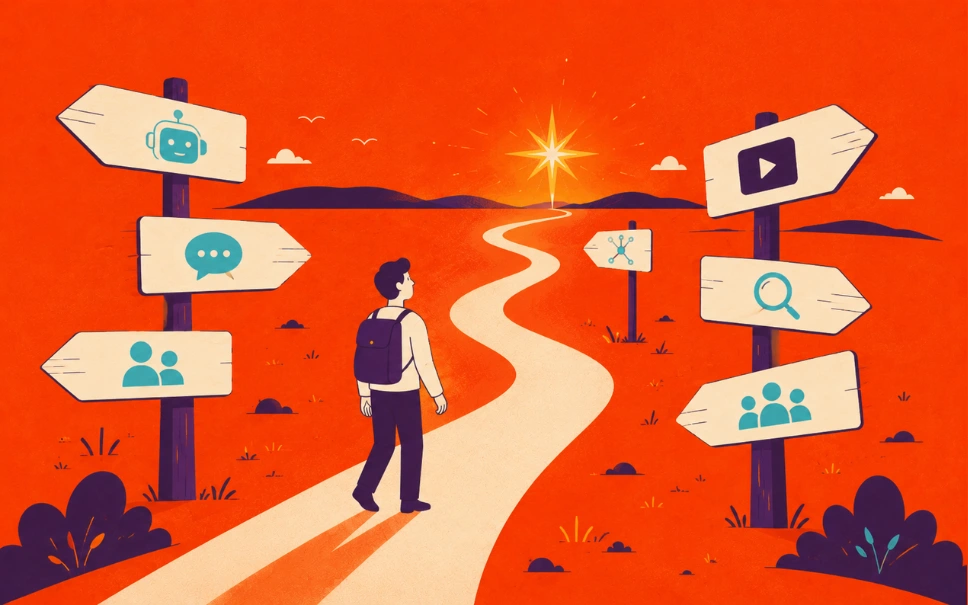
Users no longer follow a single search path. They move across platforms, languages, and formats before making a decision.
This is where Search Everywhere Optimization becomes critical.
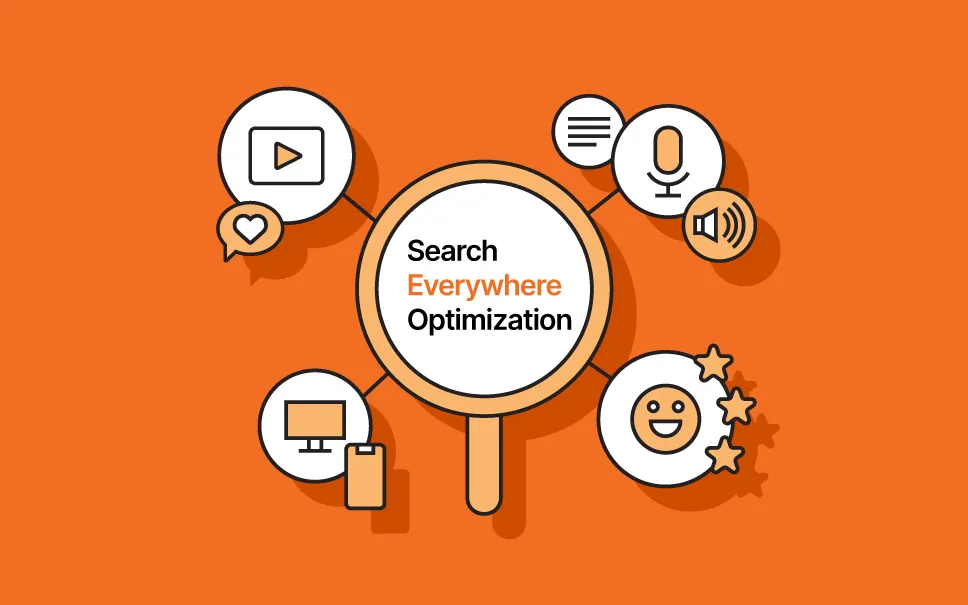
Search Everywhere Optimization is the strategy of making your brand visible across multiple platforms where users search, discover, and validate information, including search engines, social media, marketplaces, AI systems, and community platforms.
It ensures your brand is present across the full decision-making journey, not just in traditional search results.
It reflects how modern users make decisions across a fragmented and multi-touchpoint digital journey.
Key Takeaways
- SEO no longer happens only on Google
- Visibility is distributed across multiple platforms
- Each platform reflects a different stage of user intent
- AI is reshaping how information is discovered and delivered
- Brands must optimize for ecosystems, not individual channels
Why SEO Is No Longer Just Google
The traditional search journey was simple: a user searched on Google, clicked a result, and made a decision.
Today, that journey is fragmented.
Users discover content on TikTok, validate it on YouTube, compare options on Google, and increasingly rely on AI systems or community platforms before deciding.
This shift is not theoretical. It reflects how people actually behave, especially in multicultural markets like the U.S. Hispanic audience, where language and platform usage often overlap.
As a result, a single platform no longer defines visibility. It is distributed across an entire ecosystem.
The New Visibility Ecosystem in 2026
A single platform no longer defines how people search. It is shaped by multiple environments, each representing a different moment in the user journey.
We can group these environments into key visibility categories:
Transactional search
Platforms like Amazon or marketplaces capture high-intent users ready to take action.
Discovery and trust
Platforms such as YouTube and TikTok influence how users explore, learn, and validate before making decisions — which is why YouTube keyword research matters just as much as ranking on Google.
Local and proximity search
Tools like Google Maps or voice assistants help users find immediate solutions based on location.
AI-driven search
Systems like ChatGPT or Gemini synthesize information and shape how users receive answers.
Community validation
Platforms like Reddit or forums influence trust through real user experiences.
Each of these environments requires a different strategic approach, which is why modern SEO must be understood as an ecosystem, not a channel, as we also explain in our multilingual content marketing approach.
Most brands are still optimizing for Google. The ones that win are optimizing for visibility across the entire ecosystem.
How User Intent Defines Where SEO Happens
The key to understanding this ecosystem is user intent.
Each platform reflects a different type of intent:
Discovery
Users explore ideas, often through video or social content.
Validation
They seek confirmation through reviews, community feedback, or long-form content.
Comparison
They evaluate options through search engines or structured content.
Decision
They act, often through local search, marketplaces, or direct brand interaction.
A strong strategy does not treat these as separate channels, but as part of a structured content strategy aligned with user intent. Understanding this behavior across languages is essential, which is why multilingual keyword research plays a critical role in this process.
How This Connects to Spanish SEO
For brands entering the U.S. Hispanic market, this fragmented journey becomes even more complex.
Users may search in English, validate in Spanish, and make decisions based on culturally relevant content. This bilingual behavior is one of the most important factors brands must understand when building a visibility strategy for this audience.
This is why brands cannot treat Spanish SEO as a simple translation of an existing strategy. It must be built around how Spanish-speaking audiences actually navigate this multi-platform environment. We break this down in detail in our post on Spanish SEO for the U.S. Hispanic market.
This also impacts how keyword research should be approached in Spanish. Understanding how users search across languages is critical to building visibility, which is why multilingual keyword research plays a key role in this process.
The Future of SEO: Visibility, Not Rankings
Google still matters, but it is no longer the center of the search universe.
Visibility today is defined by presence across platforms, formats, and systems. This becomes even more critical when building a Spanish SEO strategy for the U.S. Hispanic market, where visibility depends on how users move across languages and platforms.
The brands that win are not the ones that rank in one place, but the ones that show up consistently across the entire decision-making journey.
In this context, SEO is no longer just search engine optimization.
It is search everywhere optimization.
Frequently Asked Questions about Search Everywhere Optimization
What is Search Everywhere Optimization?
Search Everywhere Optimization is the strategy of making your brand visible across multiple platforms where users search, discover, and validate information.
It goes beyond traditional SEO by focusing on presence across multiple platforms instead of rankings in a single search engine.
Is SEO only about Google?
No. SEO has evolved beyond Google into a multi-platform visibility strategy.
How does AI impact SEO?
AI changes how information is delivered by providing direct answers instead of links, requiring brands to build authority across platforms.
Why do users search across multiple platforms?
Because they need multiple touchpoints to discover, validate, and make decisions.
If your brand wants to stay visible in today’s search environment, it is not about doing more SEO. It is about building the right strategy for how people actually search.
At Yucalab, we help brands design visibility strategies that go beyond Google and connect with real audiences across the platforms where decisions are actually made.