

YouTube keyword research is the process of identifying the exact search queries your audience uses to find content on the platform.
It is one of the most important components of YouTube SEO because it defines what your videos are about, who they reach, and how they perform over time.
Unlike traditional SEO, keyword research on YouTube is not only about search volume. It is about understanding intent, behavior, and how users interact with video content.
In this guide, you will learn how to find the right keywords, how to validate them, and how to use them to increase visibility, clicks, and long-term growth.
Key Takeaways
- YouTube keyword research defines what your videos rank for and who discovers them.
- Search intent matters more than volume when choosing keywords.
- YouTube autocomplete and competitor analysis reveal real user behavior.
- Long-tail keywords are critical for ranking in competitive niches.
- Keyword research should guide content creation, not just optimization.
- For brands, keyword research is the foundation of a scalable YouTube SEO strategy.
Why Keyword Research Matters on YouTube
YouTube functions like a search engine, but it also operates as a recommendation system driven by user behavior.
If you want to understand how visibility works beyond keywords, explore our complete post on YouTube SEO.
Why is keyword research essential?
- It helps YouTube understand your video’s topic.
- It increases your visibility in search results and suggested videos.
- It attracts the right audience—people actively searching for content like yours.
When I started optimizing videos, I noticed that choosing the right keywords could turn a video with a few hundred views into one with thousands or even millions. It’s all about matching your content with what people are searching for.
How YouTube’s Search Algorithm Works
To rank videos, YouTube considers:
- Relevance → Do your title, description, and tags match the search query?
- Engagement → Do people watch your video till the end? Do they like, comment, and share it?
- Watch Time → Longer watch duration signals high-quality content.
How Keywords Influence Rankings
YouTube scans your video’s metadata (title, description, tags, captions, and even spoken words in the video). If your content aligns with what people are searching for, it has a higher chance of ranking.
I’ve tested this—longer, in-depth videos (10+ minutes) tend to rank better, especially when optimized with relevant keywords and engaging storytelling.
Now that you understand how YouTube ranks content, the next step is knowing how to find the best keywords that align with your audience’s search behavior.
How Keyword Research Fits Into YouTube SEO
Keyword research is only one part of a larger system.
While this guide focuses on how to find and use keywords, YouTube SEO also includes click-through rate, audience retention, content structure, and recommendation systems.
If keyword research defines what your video is about, performance signals determine how far it goes.
That is why keyword research should always be connected to a broader YouTube SEO strategy, not treated as an isolated tactic.
How to Find the Best Keywords for Your YouTube Videos
Finding the right keywords is a mix of strategy and research. Here are my top methods:
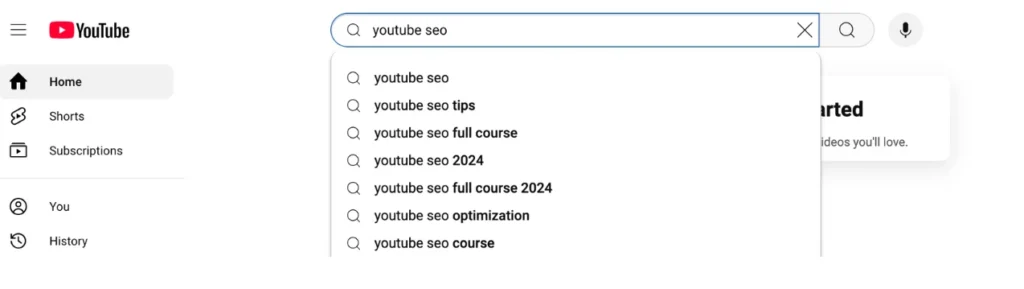
YouTube’s Search Autocomplete (Free & Effective!)
Simply type a broad topic in the YouTube search bar, and it will suggest the most searched phrases.
Example:
If you type “YouTube SEO”, you might see:
- YouTube SEO tutorial 2026
- YouTube SEO tips for beginners
- How to rank YouTube videos fast
These are real search queries that people are actively looking for.
Analyzing Competitor Videos
I always analyze top-performing videos across different niches to uncover keyword opportunities.
- Titles, descriptions, and tags → What keywords are they using?
- Repetition patterns → Are there specific terms appearing in multiple videos?
- Comments → What are viewers asking for? These can reveal valuable content ideas.
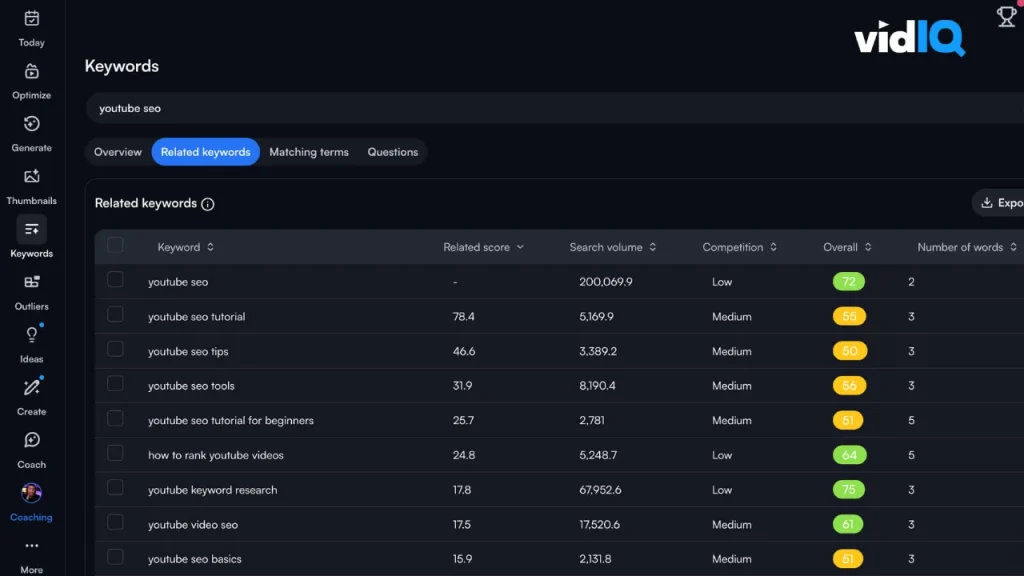
Using Keyword Research Tools
If you want deeper insights, tools like VidIQ and Google Trends help you:
- Find keyword search volume (how often people search for a term).
- Analyze keyword difficulty (how competitive a keyword is).
- Discover trending topics before they get saturated.
I’ve found that mixing keyword research tools with YouTube’s autocomplete gives the best results.
Understanding Search Intent in YouTube SEO
Not all searches are the same. Understanding search intent is critical.
- Informational Searches → How to edit YouTube videos
- Commercial Searches → Best microphone for YouTube videos
- Educational Searches → History of digital marketing
How to Optimize for Each Type of Search Intent
- Tutorials & How-to Videos: Use clear, instructional titles → How to Rank YouTube Videos in 2026
- Product Reviews: Focus on problem-solving → Best Budget Camera for YouTube 2026
- Listicles & Comparisons: People love top lists → Top 5 YouTube SEO Tools for Creators
By aligning your content with actual search queries, you increase your chances of ranking higher and attracting more viewers.
The Different Types of YouTube Keywords
Using the right type of keywords can help you rank faster.
- Broad keywords → “Recipes” (high competition, hard to rank).
- Mid-tail keywords → “Healthy recipes” (more specific, better ranking chances).
- Long-tail keywords → “Easy and quick healthy recipes” (less competition, higher conversion).
Why Long-Tail Keywords Are the Best for Small Channels
When I started working with YouTube channels, I quickly realized that long-tail keywords were the key to sustainable growth. They have less competition but higher intent, meaning they attract viewers who are actively searching for specific content.
By implementing this strategy across multiple client channels, we’ve been able to increase rankings, boost organic traffic, and drive consistent engagement. This approach has proven especially effective for newer channels looking to establish authority and gain visibility in competitive niches.
If you want to go deeper into how keyword research connects with content strategy and ranking factors, explore our full YouTube SEO article.
Where to Place Keywords for Maximum SEO Impact
YouTube scans multiple elements of your video. Here’s where to insert keywords for maximum impact:
- Title → Make it catchy and include your main keyword.
- Description → Use variations of your keyword naturally.
- Tags → Reinforce relevance but don’t overstuff.
- Captions & Subtitles → YouTube reads them.
- Timestamps → Helps with search rankings.
I always make sure the main keyword appears within the first 100 characters of my title and description.
For brands, keyword placement is not just about optimization. It is about building a system where every element of the video supports visibility, engagement, and conversion.
At Yucalab, we connect keyword research with content strategy and performance signals to build scalable YouTube growth systems.
Explore our YouTube SEO services to see how this works in practice.
Pro Tips for Better Keyword Research in 2026
Keyword research is evolving—what worked in 2023 may not work in 2026.
Here’s what’s changing:
- AI-driven search optimization → YouTube’s algorithm is smarter than ever.
- Voice search is rising → More people are using “Hey Google, show me…” searches.
- Short-form content (YouTube Shorts) is influencing search rankings.
What’s Working for Me and Our Clients Now
Through my work with YouTube creators and businesses, I’ve found that the best results come from a strategic mix of trending keywords and evergreen content.
By leveraging viral topics, we help channels gain quick visibility and engagement, while long-term SEO ensures sustained traffic and consistent growth.
This balanced approach allows our clients to rank higher, attract the right audience, and build a strong content foundation that keeps delivering results over time.
Mastering YouTube Keyword Research for Long-Term Success
- Keyword research is not just about ranking—it’s about making your videos discoverable for months or even years.
- Optimizing for search intent and long-tail keywords is the best strategy for growth.
- Consistently testing and refining your keyword strategy is the key to success.
Keyword research is where YouTube SEO starts, but it is not where results are created.
If your videos are not reaching the right audience, the problem is not just keywords. It is strategy.
At Yucalab, we help brands turn keyword research into scalable YouTube growth systems by connecting search intent, content, and user behavior.
If you want to build a YouTube strategy that drives visibility, engagement, and real business results, explore our YouTube SEO services or request a custom audit.